

The finish of a porcelain tile affects more than its appearance. It shapes how the floor handles spills, foot traffic, moisture, and daily cleaning. Two popular options, glazed and unglazed porcelain, offer different features for residential spaces. Understanding glazed vs. unglazed porcelain tile helps you select a surface that suits each room’s needs and style.
At Diamond Floors of South Carolina, we guide flooring projects with careful attention to tile quality, finish, and installation. Both options bring value to a home. However, their surface layers, textures, and care needs set them apart. Let’s look at their key differences and find the right fit for your floors.
What Is Glazed Porcelain Tile?
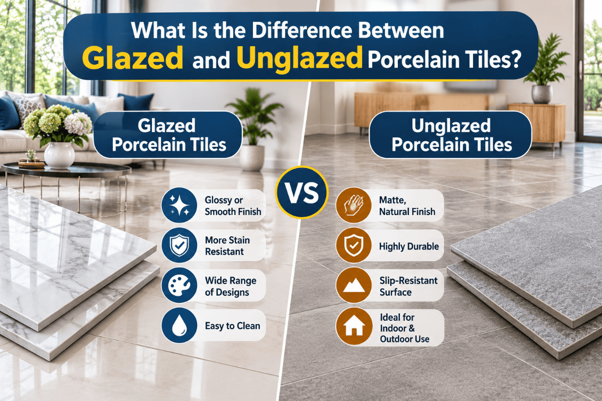
A glazed porcelain tile has a thin glass-like coating on its surface. Manufacturers apply this layer before firing the tile in a kiln. The glaze forms a sealed finish and gives the tile its color, pattern, and texture.
This coating supports several design choices. You will find glazed tiles in matte, glossy, stone-look, and wood-look styles.
Key benefits include:
- A wide range of colors and patterns.
- A surface that resists common household stains.
- Simple daily cleaning with suitable products.
- Design options for kitchens, bathrooms, and living areas.
The surface finish also affects the tile’s look. A polished porcelain tile offers a smooth, reflective surface, while matte glazed options create a softer look. These porcelain tile finishes suit different interior styles and room needs.
Read More :- Carpet vs. Rugs: Which Is Right for Your Home?
What Is Unglazed Porcelain Tile?
An unglazed porcelain tile has no added glass coating. Its color and texture come from the porcelain body itself. Manufacturers fire the tile at high temperatures, creating a dense and durable surface.
This finish gives the tile a natural, earthy look. It suits spaces where texture and grip matter.
Main features include:
- A natural, consistent appearance.
- Strong resistance to wear.
- Textured options for added traction.
- Suitable choices for indoor and outdoor areas.
Some unglazed tiles have a polished finish, while others retain a natural matte texture. Their surface needs proper sealing when the product calls for it. Our team checks the tile’s care needs before planning installation.
Glazed vs. Unglazed Porcelain Tile: What Are the Main Differences?
Both tile types offer strength and style. However, their surface structure affects stain resistance, texture, and upkeep.
| Feature | Glazed Porcelain | Unglazed Porcelain |
| Surface | Glass-like coating | Natural porcelain body |
| Appearance | Wide range of designs | Natural, uniform look |
| Stain resistance | Strong surface protection | Depends on density and sealing |
| Texture | Smooth or textured | Natural or textured |
| Maintenance | Simple routine cleaning | Product-specific care |
| Common use | Kitchens, bathrooms, living rooms | Patios, entryways, high-traffic areas |
These differences guide the choice between the two porcelain tile finishes. Room use, foot traffic, and surface texture all matter during selection.
Which Porcelain Tile Is Better for Bathrooms?
Bathrooms need flooring that handles water, moisture, and regular cleaning. Both glazed and unglazed tiles suit bathroom projects when their ratings and surface features match the space.
Glazed tiles offer a protective surface and a wide range of designs. Textured unglazed tiles provide another option where traction matters. The right answer to which porcelain tile is better for bathrooms depends on the tile’s slip rating and intended use.
Our porcelain tile installation process considers these details before selecting a layout and finish. We assess the room and match the tile to its practical needs.
How Do You Choose the Right Porcelain Tile Finish?
Start with the room’s purpose, design, and daily use. Then compare the following points:
- Appearance: Glazed tiles offer more color and pattern choices. Unglazed options bring a natural look.
- Foot traffic: Dense porcelain suits busy areas. Check the product’s wear and performance ratings.
- Surface grip: Textured finishes support better traction in suitable spaces.
- Cleaning needs: Glazed surfaces offer simple routine care. Unglazed products need care based on their finish.
- Location: Outdoor projects need tiles rated for exterior use and local weather conditions.
At Diamond Floors of South Carolina, our Professional floor Installation Services include careful product and layout planning. We review the room’s needs before the installation begins.
Give Your Floors the Right Finish
At Diamond Floors of South Carolina, we bring product knowledge and skilled craftsmanship to every flooring project. As an experienced ceramic tile installation company, we pay close attention to tile selection, surface preparation, and precise placement.
Ready to find the right porcelain tile for your home? Contact Diamond Floors of South Carolina today, and let’s create a floor that looks great and suits your everyday needs.
Frequently Asked Questions
Q1: What is the difference between glazed and unglazed porcelain tile?
Glazed porcelain has a glass-like coating that adds color, design, and surface protection. Unglazed porcelain has no added coating, so its natural texture and color come from the porcelain body itself.
Q2: Which is more stain resistant?
Glazed porcelain offers strong stain resistance due to its protective surface layer. Unglazed porcelain also resists stains, though some products need sealing. Product specifications guide the right care method.
Q3: Which is more slip resistant?
Slip resistance depends on surface texture and testing ratings, not just the glaze. Textured matte tiles offer added traction. Always check the manufacturer’s slip rating before choosing flooring for wet areas.
Q4: Is glazed or unglazed porcelain better for bathrooms?
Both suit bathrooms when their slip ratings and moisture performance match the space. Textured finishes support traction, while glazed options offer a broad range of colors and easy surface care.
Q5: Can unglazed porcelain be used outdoors?
Yes. Exterior-rated unglazed porcelain suits patios and walkways. Check its slip rating, water absorption, and frost resistance before selection. Proper installation also supports long-term outdoor performance.
Q6: Does glazed porcelain chip or scratch easily?
Glazed porcelain offers a durable surface, though hard impacts and sharp objects can damage its coating. Choose a suitable tile grade and rely on professional installation for a lasting floor.
Q7: How do I clean glazed and unglazed porcelain?
Clean both finishes with a soft mop, warm water, and a suitable pH-neutral cleaner. Follow product care instructions, especially for unglazed tiles that require sealing or special treatment.
Q8: How do I choose between them?
Consider the room, foot traffic, surface grip, design, and cleaning needs. Compare product ratings and samples before making a choice. A flooring professional can guide the selection.

O.K. Van Slett is the Owner of Diamond Floors of South Carolina, a family-owned flooring company founded in 1995. Built on a commitment to quality craftsmanship, exceptional value, and personalized service, O.K. continues the company’s mission of helping homeowners and businesses make confident flooring decisions. Drawing on years of hands-on experience, he shares practical insights on hardwood, luxury vinyl plank (LVP), laminate, tile, carpet, and professional installation. His articles are designed to educate readers with trusted, experience-based guidance on selecting, installing, and maintaining quality flooring for lasting performance and beauty.