

A beautiful hardwood floor deserves a finish that brings out its natural grain and protects its surface. The finish affects the wood’s color, shine, feel, and care needs. Choosing the right hardwood floor finishes also helps match the floor to each room’s daily use.
At Diamond Floors of South Carolina, we look at the wood type, room style, and household needs before recommending a finish. Each option offers a different look and level of protection. Understanding hardwood floor finishes makes it easier to choose a style that suits your home.
What Are the Main Types of Hardwood Floor Finishes?
Hardwood finishes fall into two main groups. Surface finishes create a protective layer over the wood. Penetrating finishes soak into the grain and give the floor a more natural look. Both groups include several options, and each has its own care needs.
Oil-based polyurethane creates a strong coat over hardwood. It adds a warm, amber tone that deepens the wood’s natural color. This finish suits rooms with regular foot traffic and homes that prefer a rich wood look.
An oil-based vs. water-based polyurethane comparison starts with color and drying time. Oil-based products take longer to dry and cure. They also produce a stronger smell during application. Our installers follow product instructions and allow each coat enough time to set.
Water-based polyurethane forms a clear coat over the wood. It keeps the floor close to its natural color and dries faster than oil-based products. It also produces less odor during application.
A polyurethane hardwood floor finish offers a smooth surface with different sheen options. Water-based products suit light wood tones and modern room designs. Our hardwood floor installers check the product details before applying each coat. This helps create an even finish with a neat look.
Hardwax oil blends natural oils and waxes. It soaks into the wood and creates a soft protective layer. The finish brings out the grain and gives hardwood a warm, natural look.
This option suits rooms with a relaxed style. It needs cleaning products made for oiled floors. Hardwax oil also supports spot treatment in selected areas, based on the product maker’s instructions. We explain these care needs when comparing hardwood floor finishes.
Penetrating oil enters the wood instead of forming a thick surface coat. It deepens the grain and gives the floor a rich tone. This finish suits homes where a natural wood look is the main goal.
The floor needs regular care with products made for oiled surfaces. As a family-owned flooring company, we review the room’s use and the product’s care plan before recommending this option.
Shellac gives hardwood a warm glow and highlights its grain. Wax adds a soft shine and smooth feel. These traditional finishes suit select restoration projects and classic interiors. Their care needs differ from modern polyurethane systems, so product choice matters.
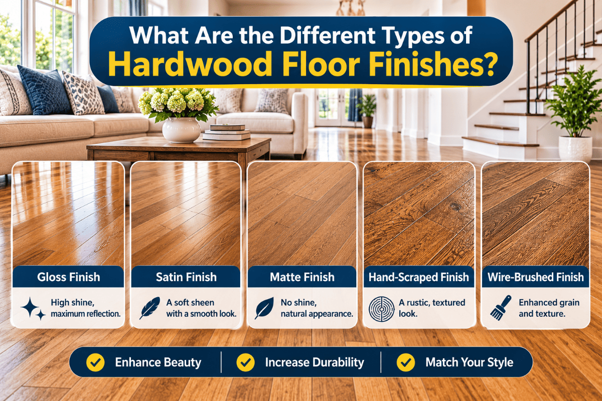
How Do Matte, Satin, and Gloss Finishes Compare?
Sheen describes how much light a finish reflects. It changes the floor’s appearance, even when the same product covers the wood. The matte vs. satin vs. glossy hardwood floor finish choice depends on your preferred style.
- Matte: Offers very little shine and gives wood a soft, natural look. It suits rustic and modern rooms.
- Satin: Adds a gentle glow without strong reflection. It works well in bedrooms, living rooms, and shared spaces.
- Gloss: Reflects more light and creates a polished look. It suits formal rooms and classic designs.
We review samples with you so you can compare how each sheen looks with your wood color and room lighting. This makes choosing between types of hardwood floor finishes easier.
What Is the Most Durable Hardwood Floor Finish?
Durability depends on the product, application, room use, and care. Oil-based and water-based polyurethane both offer strong surface protection. A quality polyurethane coating is a strong choice for rooms with regular activity.
The best finish for hardwood floors balances surface protection with the look you want. A best hardwood floor finish for high-traffic areas usually includes a durable polyurethane coating applied by trained professionals. Entryways, hallways, and family rooms need a finish suited to daily foot traffic.
As a family-owned flooring company, we value careful planning and clear product advice. We compare hardwood floor finishes with each room’s needs instead of suggesting one product for every space.
Read More :- Choosing the Best Laminate Floors for Families with Children
How Do You Choose the Right Finish?
Start with the room’s daily use. A busy hallway needs a durable surface, while a bedroom suits a softer look. Next, think about the wood color, sheen, and care routine.
Keep these points in mind:
- Room activity: Match the finish to foot traffic and daily use.
- Wood tone: Choose a clear coat or warm amber shade based on your preferred look.
- Sheen: Compare matte, satin, and gloss samples.
- Care needs: Review the cleaning rules for each product.
- Professional application: Select a finish suited to the wood and installation plan.
We discuss the types of hardwood floor finishes alongside room use, wood type, and design goals. Our hardwood floor installers follow the product maker’s instructions for surface preparation, coating, and curing. Careful work supports an even finish and a polished result.
Give Your Hardwood Floors a Finish That Fits
The right finish brings out the wood’s natural beauty and gives the surface protection suited to daily life. From clear polyurethane to rich oils, each option creates a distinct look.
At Diamond Floors of South Carolina, we explain the types of hardwood floor finishes, compare the best finish for hardwood floors, and plan each project with care. Contact our team to discuss your hardwood flooring goals and choose a finish that brings warmth and style to your home.
Frequently Asked Questions
Q1: What are the main types of hardwood floor finishes?
The main options include oil-based polyurethane, water-based polyurethane, hardwax oil, penetrating oil, shellac, and wax. Each product gives wood a different color, sheen, level of protection, and care routine.
Q2: What is the difference between oil-based and water-based finishes?
Oil-based polyurethane adds a warm amber tone and takes longer to dry. Water-based polyurethane keeps wood closer to its natural shade, dries faster, and produces less odor during application.
Q3: Which finish is the most durable?
Both oil-based and water-based polyurethane offer strong surface protection. The right product depends on room use, wood type, application, and care. Professional installation supports an even coat and a lasting finish.
Q4: What are the differences between matte, satin, and gloss?
Matte has little shine and gives wood a natural look. Satin adds a soft glow, while gloss reflects more light and creates a bright, polished surface.
Q5: How long does each finish take to cure?
Curing times vary by product, room temperature, and air flow. Water-based polyurethane dries sooner than oil-based products. Follow the maker’s timeline before placing rugs or furniture on the floor.
Q6: How often should hardwood floors be refinished?
Refinishing needs depend on foot traffic, finish type, wood condition, and care. A flooring professional checks the surface and recommends a schedule based on its wear and remaining finish.
Q7: Do finishes change the color of the wood?
Yes. Oil-based polyurethane adds a warm amber tone, while water-based polyurethane keeps wood closer to its natural shade. Oils also deepen the grain and bring out rich wood tones.
Q8: How do I choose the right finish?
Consider room use, wood color, sheen, and care needs. Our flooring team reviews these details, explains product options, and recommends a finish suited to your home and flooring goals.

O.K. Van Slett is the Owner of Diamond Floors of South Carolina, a family-owned flooring company founded in 1995. Built on a commitment to quality craftsmanship, exceptional value, and personalized service, O.K. continues the company’s mission of helping homeowners and businesses make confident flooring decisions. Drawing on years of hands-on experience, he shares practical insights on hardwood, luxury vinyl plank (LVP), laminate, tile, carpet, and professional installation. His articles are designed to educate readers with trusted, experience-based guidance on selecting, installing, and maintaining quality flooring for lasting performance and beauty.