


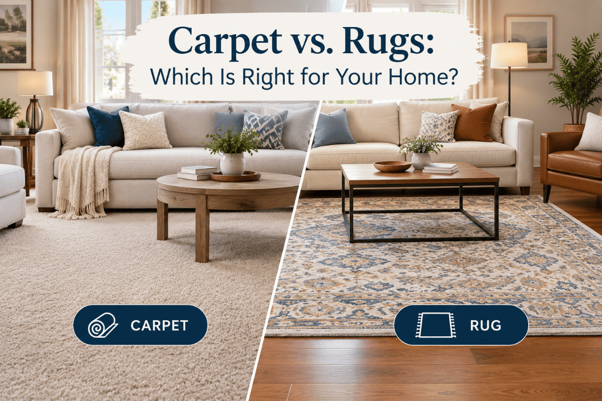
Choosing the right floor covering changes how your home looks, feels, and works each day. Carpet adds warmth across a room, while rugs bring color, style, and comfort to selected areas. At Diamond Floors of South Carolina, we help homeowners compare their options and find flooring that fits their rooms, needs, and daily routines. The right choice depends on your budget, room size, cleaning needs, and design goals.
Before choosing carpet flooring for homes, consider how each option handles foot traffic, spills, noise, and daily wear. Understanding these differences helps you make a smart choice for every room.
What Is the Difference Between Carpet and Rugs?
Carpet covers most or all of a room’s floor. Installers attach it to the floor with suitable padding and fastening methods. This creates a smooth, soft surface across the space. Rugs cover only part of the floor. They come in many shapes, sizes, colors, and patterns. You can place them under a coffee table, beside a bed, or beneath a dining table.
Both options add comfort and style. However, their uses differ based on the room and your needs.
| Feature | Carpet | Area Rugs |
| Coverage | Covers most of the floor | Covers a selected area |
| Installation | Needs proper fitting and floor preparation | Most rugs need no permanent installation |
| Design changes | Takes more work to replace | Easy to move or swap |
| Comfort | Creates a soft surface across the room | Adds softness to selected spots |
| Cleaning | Needs regular vacuuming and periodic deep cleaning | Cleaning depends on size and material |
| Floor protection | Covers the floor across a large area | Protects selected areas from wear |
What Are the Benefits of Carpet Flooring?
Carpet offers a soft, warm surface underfoot. It suits bedrooms, family rooms, and other spaces where comfort matters. In addition, carpet absorbs sound, making rooms feel quieter.
Where Does Carpet Work Best?
Bedrooms benefit from carpet’s warmth during cold mornings. Family rooms gain a cozy feel for reading, watching movies, and spending time together. Carpet also creates a consistent look across connected spaces.
However, room use matters. Busy entryways and areas near outdoor doors collect dirt and moisture. These spaces need flooring that handles frequent cleaning and heavy foot traffic.
If you prefer a soft surface throughout the room, professional carpet installation helps create a neat finish. Proper fitting also reduces loose edges, wrinkles, and gaps.
Is Carpet a Good Choice for High-Traffic Rooms?
Carpet works well in busy rooms when you select the right fiber, pile, and color. Dense, low-pile carpet handles foot traffic better than thick, plush styles. Medium or darker shades also help hide small marks between cleanings.
Still, homes with pets, young children, or frequent spills need careful material choices. Ask about stain resistance and cleaning needs before selecting a carpet.
Read More : How To Choose a Carpet Runner for Your Stairs
What Are the Benefits of Area Rugs?
Area rugs give homeowners more freedom to change a room’s look. You can add a bold pattern, bring in a new color, or define a space without replacing the floor.
For example, rugs for family rooms help mark a seating area in an open-plan home. A rug beneath the sofa and coffee table brings the furniture together. In a bedroom, a rug beside the bed adds warmth without covering the entire floor.
Rugs offer other useful benefits:
- Easy design updates: Change rugs as your style or seasons change.
- Targeted floor protection: Cover areas beneath chairs, tables, and other furniture.
- Flexible placement: Move a rug when you rearrange your room.
- Simple room planning: Use rugs to define spaces in open layouts.
Choose the right rug size for your furniture. A rug that looks too small can disrupt the room’s design. Also, use a suitable non-slip pad to help keep it in place.
How Do Rugs Affect Room Design?
Rugs add color, texture, and shape to a room. They help link furniture, wall colors, curtains, and other design features. A patterned rug adds interest to a room with plain furniture. In contrast, a solid rug helps balance a space with bold colors or detailed prints.
Rugs also help define areas in open homes. For example, one rug can mark the living area while another sets apart the dining space. This creates a clear layout without adding walls. Carpet offers a different design effect. It creates a consistent base across the room and works well for homeowners who prefer a unified look.
Carpet Vs Rugs: Which Is Better For Your Home
Your choice depends on comfort, upkeep, cost, and room use. Carpet suits homeowners who want a soft surface across the floor. Rugs suit those who prefer flexible style and easy room updates.
Ask yourself these questions before deciding:
- Do you want soft flooring across the whole room?
- Do you need to change your room’s look with ease?
- Does the space receive heavy foot traffic?
- Do pets or children affect your cleaning needs?
- Does your existing floor need protection?
If comfort matters most, carpet offers a consistent feel underfoot. However, rugs give you more freedom to update your decor. Some homeowners use both options in different rooms to meet different needs.
The best answer to carpet vs. rugs depends on how you use each space. A bedroom may suit carpet, while a living room with hardwood floors may benefit from an area rug.
Read More : Can Luxury Vinyl Flooring Be Installed Over Existing Floors?
Find the Right Flooring for Your Home
The right floor covering should fit your lifestyle as well as your style. Carpet brings warmth and a smooth look across a room, while rugs offer flexible design and targeted comfort. At Diamond Floors of South Carolina, we help homeowners explore flooring options that suit their spaces and daily needs.
Contact our team to discuss your project, compare carpet styles, and plan your next flooring update. Let’s find the right fit for your home.
Frequently Asked Questions
Q1: What is the difference between carpet and rugs?
Carpet covers most or all of a room and needs proper installation. Rugs cover smaller areas and offer flexible placement. Both add comfort and style, but they serve different needs around the home.
Q2: What are the benefits of carpet?
Carpet adds warmth, softens each step, and absorbs sound. It creates a consistent look across a room and suits bedrooms, family rooms, and other spaces where comfort and a cozy feel matter.
Q3: What are the benefits of area rugs?
Area rugs add color, texture, and comfort without covering the entire floor. They help define spaces, protect selected floor areas, and let homeowners refresh their decor without replacing their existing flooring.
Q4: How do rugs affect room design?
Rugs bring furniture and colors together while adding texture and visual interest. They also help define spaces in open layouts. The right size and pattern create balance and make a room feel more complete.
Q5: Which option is easier to maintain?
Maintenance depends on the material, room use, and cleaning needs. Small rugs are easy to move for cleaning, while carpet needs regular vacuuming and periodic deep cleaning. Both need prompt care after spills.
Q6: Can rugs protect flooring?
Yes. Rugs help shield selected floor areas from scratches, dirt, and wear caused by foot traffic or furniture. A suitable rug pad adds grip and helps reduce movement. Clean beneath rugs to prevent trapped dirt from scratching floors.
Q7: How does carpet affect room comfort?
Carpet creates a soft surface that feels warm underfoot. It also absorbs sound, which helps reduce noise from footsteps and daily activity. These features make carpet a popular choice for bedrooms and family spaces.
Q8: What factors should homeowners consider when choosing between them?
Consider room size, foot traffic, comfort, cleaning needs, budget, and design goals. Also, think about pets, children, and the type of floor beneath the covering. These details help you select a practical option.

O.K. Van Slett is the Owner of Diamond Floors of South Carolina, a family-owned flooring company founded in 1995. Built on a commitment to quality craftsmanship, exceptional value, and personalized service, O.K. continues the company’s mission of helping homeowners and businesses make confident flooring decisions. Drawing on years of hands-on experience, he shares practical insights on hardwood, luxury vinyl plank (LVP), laminate, tile, carpet, and professional installation. His articles are designed to educate readers with trusted, experience-based guidance on selecting, installing, and maintaining quality flooring for lasting performance and beauty.