

Walk across a carpet, and your feet tell the whole story. One room feels like a cloud. Another feels firm and ordinary. The secret hides below the fibers. Good carpet padding works like a quiet teammate, absorbing every step and keeping the surface smooth. At Diamond Floors of South Carolina, we have watched this hidden layer turn ordinary rooms into favorite spots. Let’s walk through what padding does, which kinds work best, and how to pick the right one for your home.
The Hidden Layer Under Your Carpet
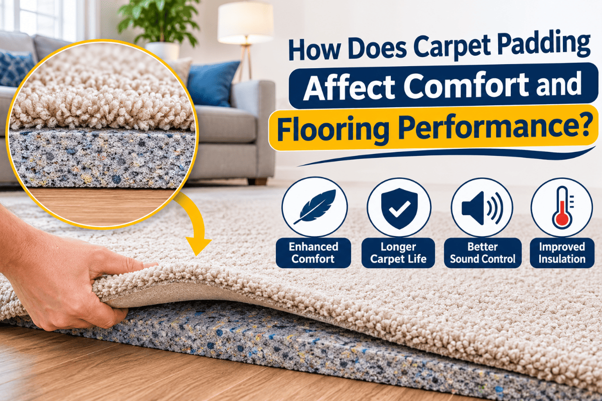
Padding is the soft layer between your subfloor and your carpet. Think of it as a mattress for your floor. It takes the weight of every step, so the fibers above stay springy. Some folks call it carpet cushion, and the name fits.
A good pad handles four jobs every day:
- Comfort: It gives under your feet and soothes your joints.
- Support: It holds the backing up and keeps the surface level from wall to wall.
- Warmth: Dense carpet padding holds heat in the room and wraps cool floors in a cozy blanket.
- Quiet: It absorbs footsteps and furniture sounds before they travel.
At Diamond Floors of South Carolina, we plan the pad before flooring carpet installation begins. A gorgeous carpet needs a strong pad, just like a fancy cake needs a sturdy plate. Pairing the two well sets the stage for a floor you love.
Read More :- Large-Format Tiles: Benefits, Design Ideas and Best Rooms
Does Carpet Padding Make Carpet More Comfortable?
Yes, and you feel it with the first step. Set two carpet samples side by side with the same fibers but different pads. The sample with the best carpet padding feels plush and calm, while the other feels ordinary.
Comfort rests on three things: density, thickness, and material. Density comes first. A firm, dense pad springs back after each step. Carpet padding thickness adds the give your feet love. Material then sets how the pad handles heat and moisture.
Comfort also shows up in daily moments. Kids tumble and play for hours. Guests stretch out on movie night. Your morning starts with a soft landing, and that is carpet padding comfort in action.
How Does Carpet Padding Affect Carpet Lifespan?
Homeowners ask this one a lot, and the answer is good news. A quality pad shields the carpet from the daily push of foot traffic. It spreads weight across a wider area, so the fibers stand tall for years. Strong carpet padding also guards the backing from the rough subfloor below.
Here is how a pad protects your investment:
- Fiber support: Dense foam keeps fibers upright in busy hallways.
- Backing care: A carpet cushion shields the backing from wood grain and concrete texture.
- Tight stretch: A firm pad keeps the carpet snug, which supports carpet padding comfort too.
So, how does carpet padding affect carpet lifespan? It adds years and keeps the surface looking fresh.
Popular Pad Types at a Glance
Every carpet padding type fits a different job. Here is a quick guide to the main options:
- Rebond foam: Firm and budget-friendly, it suits most living rooms and bedrooms.
- Flat polyurethane foam: Light and soft, it works well in guest rooms.
- Memory foam: Plush and cozy, it gives bedrooms a hotel-bed feel.
- Rubber: Dense and durable, it supports busy rooms.
- Fiber: Firm and eco-friendly, it pairs nicely with low-pile carpet.
Our crew matches each pad to the way you live, starting with your flooring carpet installation quote. A hallway wants firm support, while a bedroom wants plush softness.
What Thickness Carpet Padding Is Best?
Thickness changes how a carpet feels and holds up. Most homes do well with a pad between three-eighths and half an inch. Go thicker, and the carpet feels like a pillow. Go thinner, and it feels firm and steady.
Match carpet padding thickness to the room:
- Living and family rooms: three-eighths to seven-sixteenths of an inch.
- Bedrooms: seven-sixteenths to half an inch for extra softness.
- Stairs and hallways: one-quarter to three-eighths of an inch with high density.
Density matters just as much. With rebond foam, aim for six pounds per cubic foot or higher. A dense pad holds its shape and keeps the carpet lively for the long haul.
So, what thickness carpet padding is best? Start at three-eighths of an inch, then adjust for your room and your carpet maker’s rules.
Quiet Rooms, Cozy Floors, and Warranty Wins
Padding absorbs footsteps, voices, and furniture sounds. Rubber and rebond foam rank as the best carpet padding for sound control, so upstairs bedrooms and playrooms gain real peace and quiet.
South Carolina homes see muggy summers and chilly winter mornings. A good pad traps air and slows heat flow through the floor. Carpet tiles with cushion backing add the same cozy buffer, which makes floor carpet tile installation a smart pick for cool basements.
Carpet makers write pad rules into their warranties. Some set a carpet padding thickness range, and others name approved pad types. Our team reads these details before every job. Homeowners also ask how carpet padding affects carpet lifespan once a warranty is in the picture. The right pad protects both.
Installation Details That Seal the Deal
Even a top pad needs skilled hands. Does carpet padding make carpet more comfortable without a smooth install? It does, and a flat, secure pad locks that comfort in.
During flooring carpet installation, our crew checks the subfloor, lays the pad seam to seam, and tapes the edges. Next, we stretch the carpet tight with power tools. Before the first cut, we also confirm carpet padding thickness against the maker’s rules.
Tile jobs follow a different path. With floor carpet tile installation, we prep the subfloor and map the layout for clean lines. Some tiles come with cushion built in, so they go straight over a prepped floor.
Room-by-Room Pad Picks
- Bedrooms: Go plush. Memory foam or thick rebond delivers the carpet padding comfort you want at sunrise.
- Living rooms: Dense rebond keeps up with daily life. Does carpet padding make carpet more comfortable in a busy room? Absolutely, as long as the pad stays firm.
- Stairs: Ask what thickness carpet padding is best here, and the answer is thin and dense for crisp edges.
- Basements: Rubber or fiber pairs well with slab floors. Homeowners ask how carpet padding affects carpet lifespan in lower levels, and the answer is simple: a moisture-ready pad protects the carpet above.
- Guest rooms: Flat polyurethane foam makes the best carpet padding for light traffic and a tidy budget.
- Home offices: Rolling chairs glide across carpet tiles, and floor carpet tile installation lets you swap one tile for a fresh one anytime.
Give Your Floor a Foundation Worth Standing On
Picture your next movie night on a floor that hugs every step. Our team at Diamond Floors of South Carolina brings samples, straight answers, and skilled installers to your project. Ask us what thickness of carpet padding is best for your home. Then stand on a sample and see for yourself. Still wondering if carpet padding makes carpet more comfortable? Your own toes will answer. Call us today, and choose a carpet cushion that matches the way you live.
Frequently Asked Questions
Q1: How does carpet padding affect comfort?
A good pad adds a springy layer under your feet. It absorbs each step, eases pressure on your joints, and lifts carpet padding comfort in every room. Dense padding keeps the carpet plush for years.
Q2: Does padding make carpet last longer?
Yes. A quality pad spreads weight, supports the fibers, and shields the backing from the subfloor. Those jobs keep carpet looking full and fresh for years, so a good pad adds real life to your floor.
Q3: What thickness of carpet padding is best?
Most homes love padding between three-eighths and half an inch thick. Pair it with a density of six pounds or higher. Bedrooms enjoy the thicker end, while hallways and stairs shine with the firmer, thinner end.
Q4: What are the different types of carpet padding?
The main types include rebond foam, flat polyurethane foam, memory foam, rubber, and fiber. Rebond foam is the best carpet padding for most homes, while memory foam adds luxury and rubber brings strength.
Q5: Can carpet padding reduce noise?
Yes. Dense padding absorbs footsteps, voices, and furniture sounds before they travel. Carpet tiles with cushion backing hush a room too, which makes carpet tile installation a smart choice for playrooms.
Q6: Does padding affect carpet warranties?
Yes. Carpet makers list approved padding types, thickness, and density in their warranties. Choosing a pad within those guidelines keeps your coverage strong. Our team checks the details before every carpet installation.
Q7: Does carpet padding insulate a room?
Yes. The foam layer traps air and slows heat flow through the floor. Rooms stay warmer in winter and cooler in summer, which helps your heating and cooling system work with less effort.
Q8: When should carpet padding be replaced?
Replace the carpet cushion each time you install new carpet. Fresh padding also makes sense when the floor feels flat or less springy underfoot. Most pads give seven to ten years of solid service.

O.K. Van Slett is the Owner of Diamond Floors of South Carolina, a family-owned flooring company founded in 1995. Built on a commitment to quality craftsmanship, exceptional value, and personalized service, O.K. continues the company’s mission of helping homeowners and businesses make confident flooring decisions. Drawing on years of hands-on experience, he shares practical insights on hardwood, luxury vinyl plank (LVP), laminate, tile, carpet, and professional installation. His articles are designed to educate readers with trusted, experience-based guidance on selecting, installing, and maintaining quality flooring for lasting performance and beauty.