

Wood flooring adds warmth, character, and a timeless look to a home. Yet, choosing between solid and engineered wood takes more thought than picking a color or finish. The room, subfloor, moisture level, foot traffic, and future care all matter. A closer look at Hardwood vs. engineered hardwood flooring can help you understand which option fits your space. Both use real wood, but their construction and performance are different. Knowing these details makes it easier to choose a floor you will enjoy for years.
What Is Solid Hardwood Flooring?
Solid hardwood flooring is made from a single piece of natural wood. Each plank has the same wood from the surface down through its full thickness.
Oak, maple, hickory, and walnut are common choices. Each species has its own grain, color, texture, and hardness. You can choose from different stains and finishes to match the style of your home.
One key benefit is its ability to be sanded and refinished several times. A new finish can refresh the surface and change its appearance over the years. This gives solid hardwood a long service life when it receives proper care.
Solid hardwood works well in dry areas such as bedrooms, living rooms, dining rooms, and hallways. It needs proper installation and indoor moisture control for the best results.
How Is Engineered Hardwood Different?
Engineered hardwood has a real wood surface attached to layers of wood-based material. The top layer gives you the natural look of hardwood. The layers underneath provide added stability.
This layered design gives engineered flooring an advantage in rooms where temperature and moisture levels change. The planks are less prone to movement from normal indoor changes than solid wood.
Engineered hardwood comes in many styles, colors, plank widths, textures, and finishes. So, homeowners can get the beauty of natural wood while gaining more flexibility in where the flooring can be installed.
It can work with several subfloor types when the product and installation method are suitable for the application.
Hardwood vs. Engineered Hardwood: What Should You Compare?
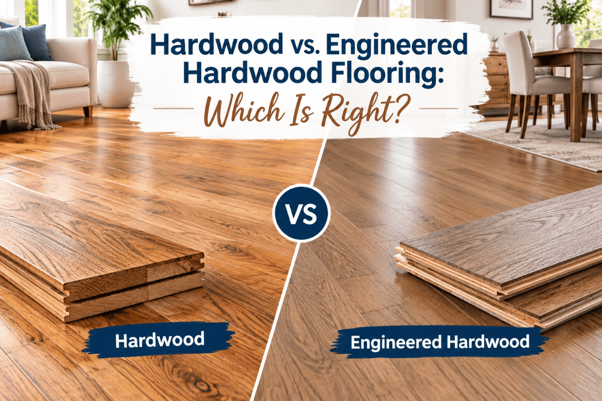
The choice becomes easier when you compare how each floor fits your home. Solid hardwood offers a thick layer of natural wood. This gives it strong refinishing potential over its service life. Engineered hardwood uses a real wood top layer with a multi-layer core. Its construction gives the planks greater stability.
Here are the main factors to consider:
- Construction: Solid hardwood uses one piece of wood. Engineered hardwood uses a real wood top layer over several supporting layers.
- Refinishing: Solid hardwood can be refinished several times. Some engineered floors can be refinished, depending on the thickness of their wood wear layer.
- Subfloor: Solid hardwood needs a suitable installation base. Engineered flooring offers more options and can work over certain concrete subfloors.
- Moisture: Engineered wood provides greater stability in areas with changing moisture levels.
- Room use: Both options suit living areas, bedrooms, dining spaces, and other suitable rooms. Engineered wood gives homeowners more flexibility in certain applications.
The goal is not to pick one material for every room. Instead, select the flooring that matches each space.
Read More :- Top 10 Benefits of Installing Luxury Vinyl Plank (LVP)
Is Solid Hardwood Better Than Engineered Hardwood for Humid Climates?
Humidity deserves close attention when selecting wood flooring. Natural wood responds to changes in moisture. Solid planks can expand and contract as indoor conditions change. Solid hardwood can perform well in a controlled indoor environment with proper installation. Engineered hardwood has a layered structure that gives it greater dimensional stability.
For this reason, engineered flooring can be a smart option for wood flooring for humid climates. Proper acclimation, moisture testing, expansion space, and installation still matter.
A flooring professional can assess the room before installation. This helps match the flooring type with the home’s indoor conditions.
Is Engineered Hardwood Good For Kitchens?
Kitchens bring together cooking, foot traffic, cleaning, and occasional spills. Flooring needs to suit these daily activities while fitting the design of the room. So, Yes, it can be a suitable choice when you select a product designed for the space and follow the correct installation and care instructions.
Engineered wood gives kitchens the warmth of real wood without the same level of movement associated with solid wood. A suitable finish can further support everyday use.
Homeowners looking for Moisture-resistant wood flooring should check the manufacturer’s product specifications. Moisture resistance does not mean the floor is waterproof. Spills should still be cleaned quickly, and standing water should never remain on the surface.
What Is the Best Wood Flooring for High-Traffic Areas?
Busy parts of a home need flooring with a suitable wood species and finish. Entryways, hallways, kitchens, family rooms, and open living spaces can see heavy daily use.
So, there is no single answer for every home. Oak, maple, and hickory are strong choices due to their hardness. Engineered hardwood with a durable finish can provide another good option.
The finish deserves attention too. It forms the top protective layer and affects how the surface handles everyday activity. A flooring professional can help compare wood species, finish types, plank construction, and care needs before you make a final choice.
Why Does the Subfloor Matter?
The subfloor gives your flooring the base it needs. A level, clean, dry, and properly prepared surface supports a better installation.
Engineered hardwood gives homeowners more subfloor flexibility. Certain products can be installed over concrete when the product allows it and the surface meets installation requirements.
For a concrete subfloor for engineered hardwood, moisture testing is an important step. Concrete can hold moisture, so installers need to check the slab before placing flooring over it.
The installation method depends on the flooring product. Some engineered planks use glue, while others use floating or nail-down methods. Following the manufacturer’s instructions helps protect the floor and subfloor.
Why Professional Installation Matters
Good flooring deserves careful preparation. Installers need to measure the space, inspect the subfloor, plan plank placement, check moisture levels, and leave the correct expansion space.
The right method can vary based on the flooring product and room conditions. Professional installation helps create clean edges, smooth transitions, secure plank placement, and a finished appearance.
For homeowners planning Engineered Hardwood Floors installation, product selection and installation should work together. A flooring professional can help determine which plank construction and installation method suit the project.
Diamond Floors of South Carolina provides guidance from product selection through installation. Each flooring project gets attention to the room’s layout, design, subfloor, and practical needs.
Which Flooring Offers Better Long-Term Value?
Both flooring types can bring lasting beauty to a home. The better value depends on how well the flooring matches the room and how it will be cared for.
Solid hardwood has strong long-term appeal because its surface can be renewed through sanding and refinishing. Engineered hardwood offers real wood beauty with a stable layered structure and flexible installation options.
Homeowners should look beyond the initial price. Product quality, installation, finish, maintenance, and expected service life all matter.
Working with a trusted floor installation company can make the selection process easier. Diamond Floors of South Carolina can help homeowners compare flooring choices based on the actual needs of their spaces.
How Should You Choose Between the Two?
Start with the room. A dry bedroom has different flooring needs than a kitchen or an area built over concrete. Next, consider the subfloor. Then look at moisture levels, foot traffic, wood species, finish, plank width, and future refinishing plans.
Solid hardwood can suit homeowners who want a thick layer of natural wood and strong refinishing potential. Engineered hardwood can suit spaces where stability and subfloor flexibility matter.
Your design goals count too. Both options offer natural wood beauty, so you do not have to give up style to choose a practical flooring solution.
Ready To Give Your Home A Fresh Wood Look?
The right wood floor should fit your room, lifestyle, subfloor, and design goals. Solid hardwood offers a classic natural structure and strong refinishing potential. Engineered hardwood brings real wood beauty with added stability and installation flexibility.
Diamond Floors of South Carolina can help you compare both options and select flooring suited to your home. From product guidance to Professional hardwood flooring installation, every detail matters.
Ready to give your home a fresh wood look? Connect with Diamond Floors of South Carolina and explore flooring options designed around your space.
Frequently Asked Questions
Q1: What is the difference between hardwood and engineered hardwood flooring?
Solid hardwood uses one solid piece of natural wood. Engineered hardwood uses a real wood surface over layered construction. This difference gives engineered flooring greater stability while solid hardwood offers a thicker natural wood structure.
Q2: Is engineered hardwood as durable as solid hardwood?
Quality engineered hardwood can provide excellent durability with proper installation and care. Its lifespan depends on the product, wood species, finish, wear layer, room conditions, and maintenance. Solid hardwood has strong refinishing potential.
Q3: Which is better, solid hardwood or engineered hardwood?
Neither option suits every project. Solid hardwood works well for dry spaces and homeowners who value refinishing potential. Engineered hardwood offers greater stability and works with more subfloor types, including suitable concrete applications.
Q4: Is engineered hardwood worth the money?
Engineered hardwood can offer strong value through real wood beauty, stable construction, and flexible installation options. A quality product paired with professional installation can create an attractive floor suited to daily household use.
Q5: Does engineered hardwood increase home value?
Quality wood flooring can improve a home’s appearance and create a polished interior. Engineered hardwood provides the look of natural wood with stable construction. Product quality, installation, condition, and overall home appeal all influence its value.
Q6: Can engineered hardwood be refinished?
Some engineered hardwood floors can be refinished, but the option depends on the thickness of the real wood wear layer. Check the manufacturer’s specifications before sanding. A flooring professional can assess the floor first.

O.K. Van Slett is the Owner of Diamond Floors of South Carolina, a family-owned flooring company founded in 1995. Built on a commitment to quality craftsmanship, exceptional value, and personalized service, O.K. continues the company’s mission of helping homeowners and businesses make confident flooring decisions. Drawing on years of hands-on experience, he shares practical insights on hardwood, luxury vinyl plank (LVP), laminate, tile, carpet, and professional installation. His articles are designed to educate readers with trusted, experience-based guidance on selecting, installing, and maintaining quality flooring for lasting performance and beauty.