

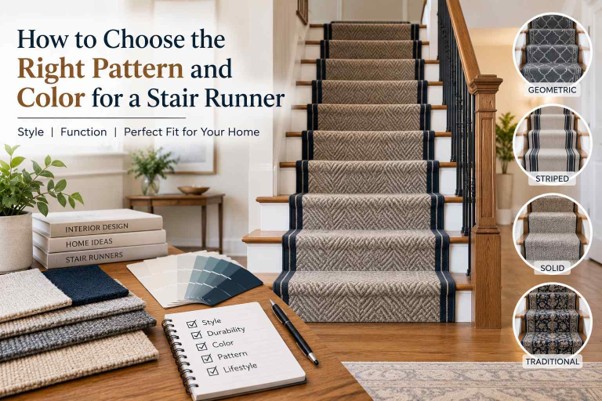
Choosing the right stair runner pattern and color depends on your staircase size, lighting, existing flooring, interior style, and daily foot traffic. Neutral designs create a classic look, while bold patterns add personality. The best option balances style, durability, safety, cleaning needs, and how the runner connects with the rest of your home.
Introduction
A stair runner does more than cover the center of a staircase. It adds warmth, texture, and character while creating a finished look between different levels of your home. The right design can make narrow stairs feel more inviting, add depth to a plain staircase, or create a strong focal point.
Learning how to choose a stair runner starts with looking at the whole space. Wall colors, flooring, natural light, furniture, and hallway décor all play a role. Daily use matters too. A busy staircase needs a runner suited to regular foot traffic, dirt, and cleaning.
The sections below explain how pattern and color work together. You will learn how to compare styles, select practical colors, and avoid common design mistakes before installation.
Quick Selection Table
| Factor | What to Consider |
| Staircase Size | Pattern and color affect how wide or long stairs appear |
| Lighting | Light changes how colors and textures look |
| Interior Style | Match the runner with the home’s décor |
| Traffic | Choose a design suited to daily use |
| Existing Flooring | Coordinate with wood, carpet, or other finishes |
| Maintenance | Consider dust, stains, and visible wear |
| Personal Style | Pick subtle, classic, bold, or modern designs |
Start With Your Staircase and Surrounding Space
Before picking a sample, study the staircase itself. Its size and location give you useful clues about the right runner.
A narrow staircase needs careful pattern selection. Large designs can feel crowded on limited stair space. Smaller patterns, narrow stripes, or simple textures create a cleaner visual flow.
Length matters too. A long staircase gives patterns more room to repeat. Short stairs need a design that looks balanced from both the bottom and top.
Next, look at natural and artificial light. Sunlight can make some colors look lighter, while warm bulbs can change how cool tones appear. Check samples at different times of day before making a final choice.
Existing finishes deserve close attention. A stair runner for wooden stairs should complement the wood tone rather than compete with it. With carpeted floors, consider texture and color so the runner connects naturally with the surrounding carpet.
Open staircases need special thought since the runner remains visible from nearby rooms. An enclosed staircase gives you more freedom to create a separate design statement.
Read More : How To Choose a Carpet Runner for Your Stairs
How to Choose the Right Stair Runner Pattern
Pattern affects the mood and visual shape of your staircase. The best selection depends on your interior style, stair size, and how much attention you want the runner to attract.
Subtle and Neutral Patterns
Subtle patterns suit homes with strong furniture, artwork, or architectural details. Small motifs and gentle textures add depth without taking over the room. They work across classic, transitional, and modern interiors. A simple design can stay useful even when other décor changes over time.
Striped Patterns
A striped stair runner creates direction and movement. Vertical-looking lines can guide the eye along the staircase and give the installation a neat appearance. Stripe width matters. Thin stripes create a delicate look, while wider stripes feel stronger. Traditional stripes pair well with classic woodwork. Cleaner lines suit contemporary spaces.
Geometric and Modern Patterns
A geometric stair runner adds shape and energy to a plain staircase. Squares, diamonds, lines, and repeating forms work well with modern décor. Keep the surrounding space simple if the pattern has strong shapes. Too many competing designs can make a staircase feel crowded.
Traditional Patterns
Floral motifs, borders, medallions, and classic repeats suit traditional interiors. These designs pair well with detailed trim, rich wood finishes, and classic furniture.
Bold Patterns
Bold patterns turn stairs into a focal point. Before choosing one, consider the size of each step and the view from nearby rooms. Large patterns need enough visual space to look balanced. A smaller staircase often benefits from a bold design with a controlled scale.
For homeowners comparing the best patterns for stair runners, balance is key. A runner should support the room’s style rather than fight with it.
How to Choose the Best Color for a Stair Runner
Color changes the feel of a staircase. It affects contrast, brightness, depth, and how well the runner blends with nearby finishes.
Neutral Colors
Beige, gray, taupe, soft brown, and similar shades offer flexible design options. Neutral stair runner colors pair with a wide range of walls and flooring. They work well if you expect your décor to change. Neutral tones provide a steady base without locking the room into one color scheme.
Dark Colors
A dark stair runner creates contrast against light walls or wood flooring. Deep gray, navy, brown, and charcoal can give stairs a grounded appearance. Darker shades need suitable lighting. In a dim staircase, a very dark runner could make the area feel smaller. Patterns and textures can keep the design from looking flat.
Light Colors
A light-colored stair runner creates a brighter, softer look. It works well in smaller or darker areas where you want an open feel. Cleaning needs deserve attention. Dust, marks, and spills tend to show more on very light surfaces, especially on busy stairs.
Bold and Accent Colors
Rich blue, green, red, or other accent shades bring personality to the staircase. Pick a color already found in nearby décor for a more connected look. For staircase color ideas, consider wall paint, artwork, furniture, doors, and flooring as a whole. A small color sample rarely tells the whole story.
Pattern vs. Color: Which Matters More?
Pattern and color should work as a pair. Neither needs to carry the whole design. A bold pattern can change how a color looks. A small pattern might appear almost solid when viewed from the bottom of the stairs. In contrast, a large pattern becomes more noticeable from a distance.
Dark colors with subtle patterns create a calm, balanced appearance. Neutral colors with bold patterns add interest without relying on bright shades.
Think about nearby flooring too. A patterned runner over detailed wood grain needs careful coordination. For better stair runner pattern and color choices, compare the runner against your walls, flooring, trim, and nearby furniture.
| Option | Best For | Practical Considerations |
| Neutral + Subtle Pattern | Timeless interiors | Easy to coordinate |
| Dark + Patterned | Busy stairs | Helps disguise some everyday wear |
| Light + Simple Design | Bright spaces | Needs closer cleaning attention |
| Bold Pattern + Neutral Base | Statement stairs | Balance with simple décor |
| Striped Pattern | Traditional or modern homes | Consider direction and scale |
| Geometric Pattern | Contemporary homes | Check long-term style appeal |
Practical Factors to Consider Before Choosing a Stair Runner
Looks matter, but everyday use matters just as much. A staircase receives repeated foot traffic, so the material needs to suit your household.
Families with children or pets should consider a stair runner for high-traffic areas with strong fibers and suitable stain protection. Think about how dirt enters your home and how frequently the stairs need cleaning.
Material affects comfort, durability, and maintenance. Wool, nylon, polyester, and blended fibers each offer different benefits. Ask about cleaning methods before installation.
Safety deserves equal attention. A properly fitted runner needs secure installation and suitable stair coverage. Loose edges, poor placement, or incorrect fitting can create a trip hazard.
Installation quality matters too. The runner should follow the shape of each tread and riser with a clean, secure finish. A durable material paired with proper installation supports long-term use.
Expert Tip
Professional Tip: Before choosing a stair runner color from a small sample, view the material on your actual staircase under different lighting. Natural light, wall colors, and nearby flooring can change how the final color and pattern appear after installation.
When to Ask a Flooring Professional for Help
Professional guidance helps when the design feels hard to picture. A flooring specialist can review your staircase, existing finishes, traffic level, and overall décor before you choose a runner.
Help becomes useful for complex stair layouts, unusual widths, landings, or open staircases. Accurate measurements matter too. The right runner width affects both appearance and safety.
An experienced flooring professional can compare materials for busy stairs and explain cleaning needs. They can review samples against your existing flooring and suggest suitable options.
Professional installation deserves equal attention. A skilled installer knows how to measure, position, secure, and finish a runner correctly. If you are comparing best flooring contractors, look for experience with stair runners and ask to see examples of completed work.
Conclusion
The right stair runner brings together color, pattern, comfort, safety, and daily practicality. Start by studying your staircase, lighting, existing flooring, and interior style. Then compare patterns and colors as a complete design rather than separate choices.
A bold runner can create a focal point, while a neutral design offers a calm and flexible look. Traffic and cleaning needs should guide the material too.
Always view samples in the actual space before making a final choice. For complex layouts or installation questions, professional guidance can help you select a runner with confidence. For homeowners seeking the best stair runner for stairs, thoughtful planning creates a result that looks good and works well every day.
Find the Right Stair Runner for Your Home
Choosing the right runner takes more than picking a color or pattern. Consider your staircase, flooring, lighting, traffic, and design goals. For expert help with runner selection, materials, measurements, and installation, Diamond Floors of South Carolina offers professional flooring guidance tailored to your space. Reach out today to explore stair runner options built for style, comfort, and everyday use.
Frequently Asked Questions
Q1: What is the best color for a stair runner?
The best color depends on your flooring, walls, lighting, and lifestyle. Neutral shades offer flexibility, while darker tones add contrast. Light colors brighten stairs but need closer attention to dirt and stains.
Q2: Should a stair runner be light or dark?
Choose light or dark based on the staircase and household needs. Light runners create an airy appearance, while dark designs provide stronger contrast. Traffic, lighting, flooring, and cleaning habits should guide the final choice.
Q3: What pattern is best for a stair runner?
The best pattern depends on your home’s style and staircase size. Stripes create direction, geometric designs add modern detail, and subtle patterns offer a classic appearance without competing with surrounding décor.
Q4: Do patterned stair runners hide dirt better?
Patterned runners can make small marks, dust, and everyday wear less noticeable than plain surfaces. The effect depends on color, pattern scale, material, and traffic. Stain resistance and regular cleaning still matter.
Q5: How do I choose a stair runner that matches my flooring?
Compare runner samples beside your actual flooring in natural and artificial light. Consider wood tones, carpet texture, wall colors, and nearby décor. Choose a runner with shared tones or balanced contrast for visual harmony.

O.K. Van Slett is the Owner of Diamond Floors of South Carolina, a family-owned flooring company founded in 1995. Built on a commitment to quality craftsmanship, exceptional value, and personalized service, O.K. continues the company’s mission of helping homeowners and businesses make confident flooring decisions. Drawing on years of hands-on experience, he shares practical insights on hardwood, luxury vinyl plank (LVP), laminate, tile, carpet, and professional installation. His articles are designed to educate readers with trusted, experience-based guidance on selecting, installing, and maintaining quality flooring for lasting performance and beauty.