

AI Overview Summary
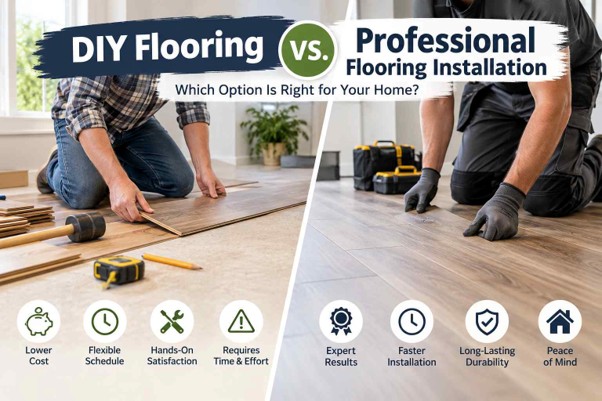
DIY flooring vs professional installation comes down to cost, skill, time, tools, flooring type, and subfloor condition. DIY work can lower labor costs for simple projects, while professional installation offers experience, proper tools, accurate fitting, and support for complex rooms or flooring systems.
Introduction
New flooring can change the look and feel of a room. It also raises an important question: should you install it yourself or hire a professional? Homeowners often consider DIY work to reduce labor costs and take control of the project. Still, flooring needs careful planning. Small errors in cutting, spacing, or subfloor preparation can affect the finished floor.
The right choice depends on the material, room size, layout, tools, time, and skill level. A simple click-lock floor in a small room has different needs than tile, stairs, or hardwood. Professional installers bring experience with measurements, preparation, fitting, transitions, and finishing. This guide compares DIY flooring installation with professional work so you can weigh the cost, effort, risks, and long-term results before starting.
Quick Comparison Table
| Factor | DIY Flooring Installation | Professional Flooring Installation |
| Upfront Cost | Potentially lower | Higher labor cost |
| Skill Required | Depends on flooring type | Professional experience |
| Time | Can take longer | Often more efficient |
| Tools | Purchase or rental might be needed | Specialized tools available |
| Subfloor Preparation | Homeowner handles it | Professional assessment |
| Installation Risk | Depends on experience | Lower with a qualified installer |
| Warranty | Depends on product rules | Could support installation requirements |
Neither option is right for every project. Product instructions, room conditions, subfloor quality, installation method, and warranty terms should guide the choice. Alexanian notes that click-lock flooring is more approachable for DIY work, while tile, glue-down flooring, stairs, and projects needing major subfloor work suit professional installation better.
Read More : Luxury Vinyl Plank vs Laminate Flooring: Which Is More Durable?
DIY Flooring Installation: Benefits and Challenges
A DIY flooring project can work well for homeowners with the right skills, time, and room conditions. Click-lock products are among the simpler choices since they need fewer specialized tools than some other flooring systems.
Benefits of DIY Flooring
The biggest attraction is labor savings. Your DIY flooring cost could be lower when you handle the installation yourself. You gain control over the work schedule and do not need to coordinate an installer.
There is a sense of pride in completing a home project yourself. You can work at your own pace and handle each part of the job.
Challenges to Consider
Installing flooring involves more than placing boards across a room. You need accurate measurements, careful cuts, proper spacing, and good subfloor preparation. You might need DIY flooring tools such as a tape measure, utility knife, saw, tapping block, spacers, and pull bar for click-lock products.
Mistakes can create waste or require repairs. A first-time project could take much longer than expected. Furniture removal, preparation, cutting, cleanup, and corrections all add time.
Before you install flooring yourself, read the manufacturer’s instructions from start to finish. Check the subfloor before buying materials, too.
Professional Flooring Installation: What Are You Paying For?
With professional flooring installation, you pay for skilled labor, proper preparation, specialized equipment, and experience. A qualified installer knows how to measure rooms, plan layouts, make clean cuts, handle transitions, and address installation problems.
More Than Laying the Floor
Professional flooring work starts before the first plank or tile goes down. The installer checks the subfloor for problems such as uneven areas, damage, and moisture concerns. A clean, dry, and suitable subfloor helps the finished floor perform as intended.
Professional installers have tools suited to the flooring material. They know how much space to leave around edges and how to handle door frames, transitions, stairs, and tight corners.
When Professional Help Makes Sense
Hiring a professional flooring contractor is worth considering for:
- 1.Uneven or damaged subfloors
- 2.Moisture concerns
- 3.Large spaces
- 4.Complex layouts
- 5.Multiple transitions
- 6.Glue-down systems
- 7.Nail-down flooring
- 8.Tile
- 9.Stairs
Professional work can reduce the risk of expensive mistakes. It can also save time when the project requires detailed preparation or specialized techniques.
DIY vs. Professional Flooring Installation: Key Differences
A useful flooring installation cost comparison should include more than labor. DIY work might remove installation fees, but tools, rentals, waste, extra materials, and correction costs belong in the budget.
1.Cost
DIY often starts at a lower price. Yet a mistake can change the final number. Buying a tool for one project adds expense. Damaged flooring adds another cost. A professional quote includes labor and installation expertise.
2.Time
A first-time installer needs time to learn the process. Alexanian reports 12 to 20 hours for a first-time 200-square-foot click-lock installation, compared with six to eight hours for an experienced installer in its example.
3.Skill and Tools
Different floors require different methods. Click-lock vinyl and laminate are more approachable. Tile, glue-down flooring, carpet, and nail-down hardwood demand greater skill and equipment.
4.Quality and Long-Term Performance
Preparation affects the finished floor. Uneven subfloors, poor expansion gaps, weak seams, and incorrect cuts can lead to visible or performance issues. Professional experience reduces these risks.
5.Warranty
Read the product warranty before starting. Some manufacturers require professional or certified installation, while others set specific installation rules for warranty coverage. Never assume DIY work will qualify.
Which Types of Flooring Can You Install Yourself?
DIY-Friendly Flooring Options
Luxury vinyl plank installation and click-lock laminate are among the more approachable DIY choices. These systems use a joining method that reduces the need for adhesives or specialized installation equipment.
A small room with straight walls and a sound subfloor offers a better setting for a first project. Still, you need accurate measurements, proper expansion gaps, suitable underlayment when required, and careful attention to the product instructions.
For laminate flooring installation, check the manufacturer’s requirements before beginning. Room layout, subfloor condition, and product design still affect the work.
Flooring Projects That Benefit From Professional Installation
Some projects require greater skill and precision. These include:
- 1.Tile
- 2.Carpet
- 3.Nail-down hardwood
- 4.Glue-down flooring
- 5.Stairs
- 6.Large installations
- 7.Complex layouts
- 8.Floors over damaged or uneven subfloors
Hardwood floors installation requires careful planning, while professional tile installation involves precise cuts, layout work, and proper substrate preparation. The material alone should not decide the installation method. Site conditions matter just as much.
When Should You Choose DIY and When Should You Hire a Professional?
Choose DIY When:
- 1.The room is small and simple.
- 2.The flooring uses an easy installation system.
- 3.The subfloor is ready.
- 4.You have the required tools.
- 5.You understand the instructions.
- 6.You have enough time.
- 7.You are comfortable handling measurements and cuts.
Consider a Professional When:
- 1.The project covers several rooms.
- 2.The layout has complex cuts or transitions.
- 3.The subfloor needs repair.
- 4.Moisture is a concern.
- 5.The material needs special tools.
- 6.Stairs are involved.
- 7.Finish quality is a top priority.
- 8.Warranty rules require professional installation.
The key question is not simply whether DIY costs less. Ask whether the savings justify the time, learning curve, tool costs, and risk of correcting mistakes.
Expert Tip
Before deciding between DIY and professional flooring installation, inspect the subfloor first. Moisture, uneven areas, damage, and preparation needs can change the difficulty of the entire project. A beautiful flooring product cannot hide a poor foundation.
Read More : How To Choose a Carpet Runner for Your Stairs
How to Decide Which Flooring Installation Option Is Right for You
Use this simple flooring installation comparison before making a choice:
- 1.What flooring material are you installing?
- 2.Is the room simple or complex?
- 3.Is the subfloor clean, dry, level, and ready?
- 4.Do you have the right tools?
- 5.How much time can you give the project?
- 6.What happens if you make a costly mistake?
- 7.Does the manufacturer require a specific installation method?
- 8.Does the warranty require certified installation?
- 9.Do you have enough flooring installation experience?
If several answers point toward greater skill or preparation, professional help deserves serious consideration.
Conclusion
DIY flooring works well for suitable projects, especially simple rooms with user-friendly flooring systems. Professional installation has clear value for complex layouts, demanding materials, difficult subfloors, and projects where finish quality matters.
Upfront price should not be the only factor in your decision. Consider tools, time, skill, preparation, waste, warranty rules, and possible repair costs. A realistic comparison gives you a clearer picture of the total project cost.
Before starting, review the flooring product, room conditions, and installation requirements. For complex work, consulting an experienced installer can help protect the appearance, performance, and long-term value of your new floor.
Plan Your Flooring Installation With Confidence
Ready to plan your next flooring project? Diamond Floors of South Carolina provides flooring guidance and installation support for homeowners who want a well-planned result. Discuss your flooring material, room conditions, and installation needs with our experienced professionals before work begins, and get practical guidance for choosing the right path.
Top 5 Questions About DIY and Professional Flooring
Q1: Is it cheaper to install flooring yourself or hire a professional?
DIY flooring can cost less upfront since you handle the labor. Yet tools, waste, preparation, mistakes, and repairs affect the final cost. Compare the complete DIY budget with a professional installation quote before deciding.
Q2: Can I install flooring myself?
You can handle some flooring projects yourself if the material, room, tools, and subfloor suit your skill level. Click-lock vinyl and laminate are more approachable, while tile, stairs, and complex layouts demand greater expertise.
Q3: Which type of flooring is easiest to install yourself?
Click-lock luxury vinyl and laminate are among the easiest flooring types for DIY installation. They need basic tools and careful preparation. Always follow the product instructions and confirm the subfloor meets installation requirements before starting.
Q4: When should I hire a professional flooring installer?
Hire a professional when the project involves stairs, complex layouts, large areas, uneven subfloors, moisture concerns, tile, glue-down flooring, or specialized tools. Professional help is valuable when precision, time, and long-term performance matter.
Q5: Does DIY flooring installation affect the manufacturer’s warranty?
DIY installation could affect warranty coverage if the manufacturer requires professional or certified installation. Other products have different rules. Read the specific warranty and installation instructions before work begins to avoid an unwanted coverage issue.

O.K. Van Slett is the Owner of Diamond Floors of South Carolina, a family-owned flooring company founded in 1995. Built on a commitment to quality craftsmanship, exceptional value, and personalized service, O.K. continues the company’s mission of helping homeowners and businesses make confident flooring decisions. Drawing on years of hands-on experience, he shares practical insights on hardwood, luxury vinyl plank (LVP), laminate, tile, carpet, and professional installation. His articles are designed to educate readers with trusted, experience-based guidance on selecting, installing, and maintaining quality flooring for lasting performance and beauty.