


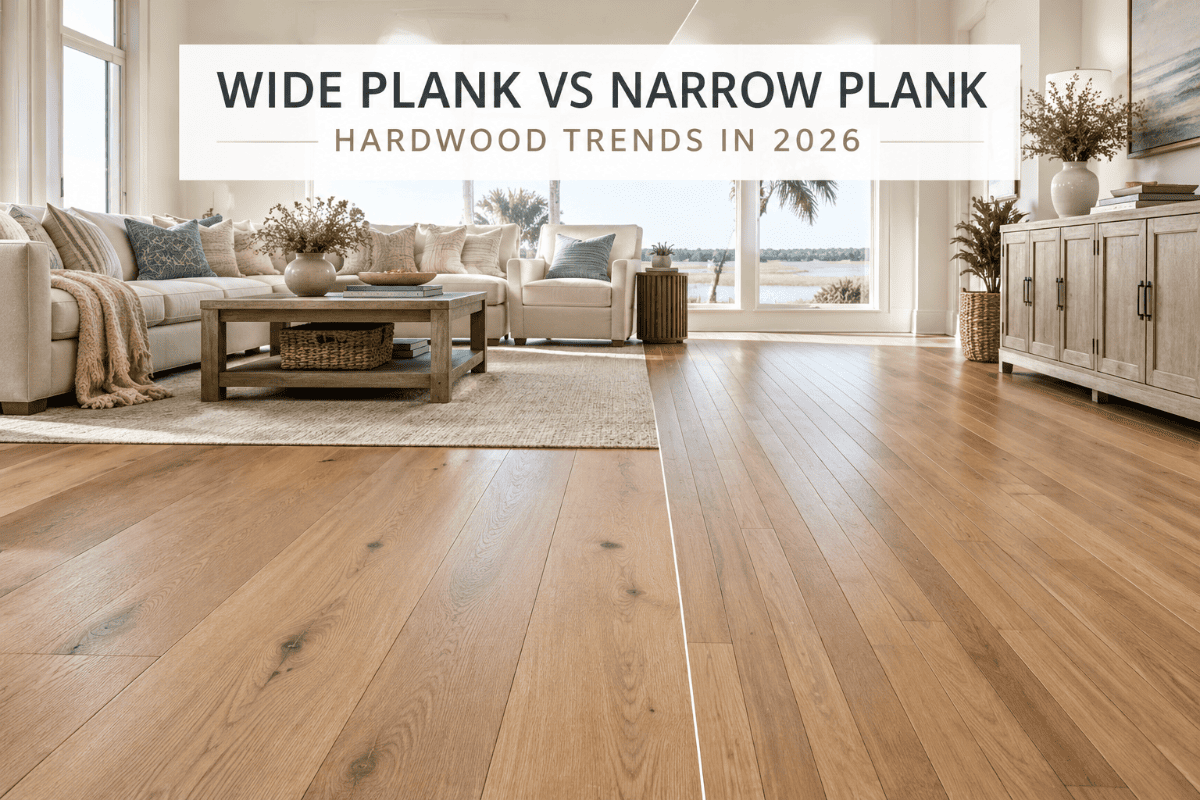
Hardwood flooring shapes the look and feel of a room. The width of each plank plays a big part in the final design. Wide planks create a clean, open look, while narrow planks bring detail and a classic feel. In 2026, both styles remain popular, with homeowners choosing based on room size, decor, and personal taste.
At Diamond Floors of South Carolina, we help homeowners compare wide plank vs narrow plank hardwood flooring to find a style that suits their homes. Understanding the key differences makes it easier to choose a floor that looks great and fits your daily needs.
What Is the Difference Between Wide and Narrow Plank Hardwood?
The main difference is the width of each wood board. Wide planks often measure around 5 inches or more, while narrow planks tend to measure about 2 to 3 inches. Exact sizes vary by product and manufacturer.
Wide Plank Hardwood
Wide planks show more of the wood’s natural grain in each board. They create fewer seams across the floor, giving rooms a smooth, open look. This style suits modern, rustic, and farmhouse interiors.
Wide planks also highlight knots, grain changes, and natural color shifts. As a result, each board adds character to the room. However, wide boards respond more to changes in moisture, so proper wood selection and installation matter.
Narrow Plank Hardwood
Narrow planks create more seams and repeat the wood grain across the floor. This pattern adds detail and works well in classic, formal, and vintage-inspired spaces.
Homeowners who prefer narrow plank hardwood for traditional homes often pair it with detailed trim, classic furniture, and warm wall colors. Narrow boards also suit some smaller rooms, as their repeated lines create a steady visual pattern.
Read More : Wide Plank Hardwood: Benefits, Styles, and Design Ideas
Which Hardwood Plank Style Is Trending in 2026?
Wide planks remain a strong choice for modern homes. Their broad surface shows off natural wood grain and pairs well with open layouts, simple furniture, and calm color schemes.
At the same time, narrow planks remain a solid option for homeowners who value classic design. Rather than following a trend alone, think about the style of your home and the look you want to create.
Popular Colors and Finishes
Natural oak, warm brown, honey, and soft beige shades work well with both plank sizes. While popular floor colors in 2025 included natural wood looks and warm neutrals, these shades continue to suit many interiors in 2026.
Matte and low-sheen finishes also fit current design preferences. They give wood a softer look and bring out its grain without a strong shine. Dark walnut adds contrast, while light oak helps rooms feel bright.
How Do Wide and Narrow Planks Compare?
Both styles have clear benefits. Use this table to compare their main features before choosing a floor.
| Feature | Wide Planks | Narrow Planks |
| Overall look | Open, clean, and bold | Classic, detailed, and patterned |
| Best suited to | Modern, rustic, and open spaces | Traditional, formal, and vintage rooms |
| Wood grain | Shows larger sections of each board | Creates a repeated grain pattern |
| Room effect | Helps create a spacious feel | Adds rhythm and visual detail |
| Moisture concerns | Needs careful control of indoor moisture | Individual boards are narrower, but moisture care still matters |
| Design flexibility | Works with simple, bold decor | Pairs well with classic and detailed decor |
Both styles work in different home settings. The best choice depends on your room, wood species, subfloor, and design goals.
How Should You Choose the Right Hardwood Plank Size?
Choosing a plank size takes more than picking a style from a photo. Room dimensions, light, furniture, and floor condition all affect the final result.
Consider Room Size and Layout
Wide planks suit open living rooms and large spaces where the grain has room to stand out. They also create fewer visible seams, which helps the floor look less busy.
Narrow planks add detail to hallways, smaller rooms, and traditional spaces. Still, either width works in a small room when the color, layout, and furniture support the design.
Match the Floor to Your Home’s Style
Modern interiors pair well with wide boards, light oak, and simple finishes. Traditional rooms often suit narrow planks, medium brown shades, and classic trim.
If you are exploring how to choose the right hardwood plank size, bring room photos and decor samples to your flooring consultation. Comparing real samples under your home’s lighting helps you judge color, grain, and width more clearly.
Check the Installation Needs
Proper hardwood flooring installation helps create a level, stable floor with neat joints. Wide boards require careful attention to moisture levels and subfloor condition. Narrow boards also require proper spacing, layout, and fastening based on the product and installation method.
Our team at Diamond Floors of South Carolina helps homeowners review flooring options and prepare for a smooth installation process.
Are Narrow Plank Hardwood Floors Still in Style?
Yes. Narrow plank hardwood remains a useful design choice in 2026. Its classic pattern suits homes with traditional details, older architecture, and timeless decor.
Narrow boards bring a detailed look, while wide planks create a broader view of the wood grain. Neither style is outdated. A good floor works with the home rather than fighting against it.
Read More : DIY Flooring vs. Professional Flooring Installation
Contact Us Today
Wide and narrow plank hardwood both offer lasting style. Wide boards bring a clean, open feel, while narrow boards add classic detail. Your room size, decor, lighting, and installation needs should guide the final choice.
At Diamond Floors of South Carolina, we help homeowners compare wood styles, plank sizes, and finishes to find flooring that suits their homes. Our team also explains installation needs and care options, including hardwood floor refinishing, to help protect the look of your investment.
Ready to update your floors? Contact Diamond Floors of South Carolina today to explore hardwood options and discuss professional hardwood floor installation for your home.
Frequently Asked Questions
Q1: What Is the Difference Between Wide and Narrow Planks?
Wide planks show larger sections of wood grain and create fewer seams across a floor. Narrow planks produce more visible lines and a detailed pattern. Both styles offer distinct looks for different room designs.
Q2: Is Wide Plank Hardwood More Popular Than Narrow Plank?
Wide plank hardwood remains popular in modern and open-plan homes. However, narrow planks still suit classic interiors. The best choice depends on room size, decor, wood species, and the look you want to achieve.
Q3: Which Plank Size Creates a More Traditional Look?
Narrow planks create a classic look through their repeated lines and detailed pattern. They pair well with traditional furniture, decorative trim, and warm wood colors. Wide planks also suit traditional homes when the finish matches the design.
Q4: Which Plank Size Suits Modern Interiors?
Wide planks suit modern interiors with open layouts, simple furniture, and clean lines. Their broad boards highlight wood grain and create a calm look. Light oak and matte finishes work well in many contemporary spaces.
Q5: Does Plank Width Affect Room Appearance?
Yes. Wide planks create fewer seams and help a floor look open, while narrow planks add visual detail. Color, lighting, board direction, and room layout also affect how large or balanced a space feels.
Q6: Does Plank Width Affect Installation?
Yes. Wide planks need careful moisture checks and a suitable subfloor to reduce movement risks. Narrow planks require proper spacing and fastening as well. Follow the flooring maker’s instructions for the best results.
Q7: Are Wide Planks Suitable for Small Rooms?
Yes. Wide planks suit small rooms when their color and layout support the space. Light shades and fewer visible seams help create an open feel. Review samples in the room before making a final choice.
Q8: How Does Plank Width Influence Hardwood Design?
Plank width changes how much grain appears on each board and how many seams show across the floor. Wide planks create a bold, open look, while narrow planks add pattern and a classic sense of detail.

O.K. Van Slett is the Owner of Diamond Floors of South Carolina, a family-owned flooring company founded in 1995. Built on a commitment to quality craftsmanship, exceptional value, and personalized service, O.K. continues the company’s mission of helping homeowners and businesses make confident flooring decisions. Drawing on years of hands-on experience, he shares practical insights on hardwood, luxury vinyl plank (LVP), laminate, tile, carpet, and professional installation. His articles are designed to educate readers with trusted, experience-based guidance on selecting, installing, and maintaining quality flooring for lasting performance and beauty.