


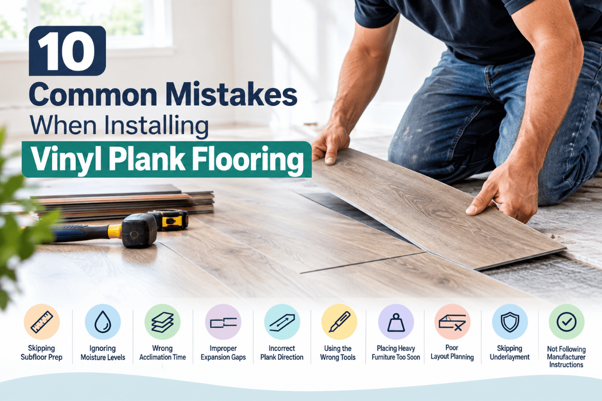
Vinyl plank flooring gives homes a clean, fresh look without the upkeep of some other floor types. Still, good results depend on proper prep and careful work. Vinyl plank flooring installation mistakes can lead to gaps, raised edges, loose planks, or damage under the floor. A good plan helps avoid these problems from the start.
For homeowners in South Carolina, flooring must handle daily foot traffic, spills, changing indoor moisture, and busy family life. Whether you are updating one room or the whole home, proper installation helps your new floor look good and last for years.
10 Common Vinyl Plank Flooring Mistakes
1. Skipping Subfloor Preparation
A new floor needs a sound base. Installing planks over a dirty, damp, weak, or uneven subfloor can cause trouble later. Small bumps can show through the planks. Low spots can cause movement. Dust and dirt can stop the planks from locking well.
Before installation, the subfloor should be clean, dry, firm, and level within the flooring maker’s stated limits. Any loose boards, cracks, or major low spots should be fixed first.
2. Installing Over an Uneven Surface
A floor does not need to look badly damaged to have level problems. Even small high and low spots can affect LVP. An uneven base can put stress on the locking joints. Over time, this can cause planks to separate or make noise when someone walks across the floor.
A proper Vinyl plank flooring installation guide should always start with subfloor checks. Taking time here can prevent costly repairs later.
3. Forgetting to Acclimate the Flooring
Some vinyl plank products need time to adjust to the room before installation. The exact time and conditions depend on the product maker. Skipping this step can cause problems if the planks are stored in a place with a very different temperature or moisture level.
Always read the product instructions before bringing the flooring into the room. Follow the maker’s rules for storage, room temperature, and installation.
4. Leaving No Expansion Space
Vinyl flooring needs room to move. Temperature changes can cause flooring materials to expand and contract.
Installers should leave the expansion space listed by the product maker around walls, door frames, cabinets, and other fixed objects. Baseboards or trim can cover the space after installation.
A tight fit may look neat at first. However, the floor needs room to move without pressing against nearby surfaces.
5. Using the Wrong Underlayment
Not every vinyl plank product needs a separate underlayment. Some planks come with an attached pad, while others require a specific type of underlayment. Adding the wrong layer can affect the locking system or change how the floor feels underfoot. It can even void the warranty on some products.
6. Ignoring Moisture Concerns
Vinyl plank flooring resists water well, but the surface material does not solve every moisture problem below it. Concrete floors need special care. Moisture can move through concrete and affect flooring if the product and installation system are not suited to the conditions.
For Vinyl plank flooring over concrete, installers should check the slab and follow the flooring maker’s moisture rules. A moisture test can help guide the right approach.
7. Creating Poor Plank Joints
The end joints need proper spacing. Placing every row with the joints lined up can create weak points and an uneven look. Learning how to stagger vinyl plank flooring helps create a stronger and more natural layout. The end joints should follow the product maker’s spacing rules.
Before cutting, plan the first few rows. This helps prevent tiny pieces at walls and keeps the pattern balanced across the room.
8. Cutting Planks Without a Layout Plan
Poor planning can waste flooring. It can leave very short pieces near doorways, walls, or other visible areas. Measure the room first. Then think about the direction of the planks, door openings, cabinets, and transitions between rooms.
A clear layout is one of the simplest ways to avoid vinyl plank flooring mistakes before the first plank goes down.
9. Failing to Use the Right Tools
Vinyl plank installation needs the right tools for clean cuts and proper joints. Using a dull blade or the wrong cutting method can damage the plank. The locking edges need extra care. A damaged edge can prevent a tight connection between planks.
A trained installer knows how to handle cuts around vents, door frames, corners, and other tricky areas. This helps the finished floor look neat rather than patched together.
10. Choosing the Wrong Installation Method
Not every vinyl floor uses the same installation method. Some products lock together as floating floors. Others use adhesive or follow a different system. The product instructions should guide the installation method. Mixing methods or using the wrong adhesive can cause serious problems.
For homeowners who want fewer risks, an experienced LVP flooring installation service can handle product checks, floor prep, cuts, joints, and finishing details from start to finish.
Read More : Top 10 Common Laminate Flooring Myths Debunked
Common Installation Problems at a Glance
| Mistake | Possible Result | Better Approach |
| Poor subfloor prep | Uneven or noisy floor | Clean, repair, and level the base |
| No acclimation | Joint or fit problems | Follow product storage rules |
| No expansion gap | Buckling or pressure | Follow the maker’s gap size |
| Wrong underlayment | Movement or joint stress | Use an approved product |
| Moisture ignored | Floor damage | Test and prepare the base |
| Poor staggering | Weak layout and poor look | Plan joint spacing |
| Bad cuts | Wasted material | Measure before cutting |
| Wrong tools | Damaged plank edges | Use proper flooring tools |
| Wrong method | Joint or adhesive failure | Follow product instructions |
| Poor finishing | Visible gaps or rough edges | Use proper trim and transitions |
Why Professional Installation Is Worth It
DIY flooring can look simple in videos. The real work starts when the installer reaches an uneven subfloor, a door frame, or a difficult corner.
Experienced luxury vinyl plank flooring installers can spot problems before they affect the finished floor. They understand floor prep, layout, cuts, transitions, and product instructions.
A trusted certified floor installation company gives homeowners peace of mind during the project. Professional work can protect your flooring investment and support a clean, finished look.
Diamond Floors of South Carolina helps homeowners choose and install flooring suited to their space. From product selection to final installation, the team focuses on careful work and a polished result.
Read More : Porcelain vs. Ceramic Tile Flooring: Which Should You Choose?
How Can You Avoid Common LVP Problems?
The best way to avoid vinyl plank flooring mistakesis to slow down before installation starts. Check the subfloor, read the product instructions, plan the layout, and prepare the right tools. For homes with concrete bases, pay close attention to moisture checks. For larger spaces, plank direction and joint spacing can shape the final look.
A skilled installer can handle these details while helping homeowners avoid common LVP installation mistakes.
Give Your Floors a Strong Start
A beautiful vinyl floor begins long before the first plank is installed. Good planning, proper floor prep, correct spacing, and skilled workmanship all help create a floor you can enjoy for years.
Diamond Floors of South Carolina is here to help with product guidance and Waterproof flooring installation for homes across the region. If you are planning a new LVP project, reach out to the team and discuss your space, flooring needs, and installation goals.
Let Diamond Floors help you place every plank correctly.
FAQs
Q1: How do you avoid mistakes when installing vinyl plank flooring?
Start with a clean, dry, and level subfloor. Follow the flooring maker’s instructions for acclimation, expansion gaps, layout, underlayment, and joints. Use proper tools and plan difficult cuts before installation begins.
Q2: What happens if vinyl plank flooring is not acclimated?
If a product requires acclimation, skipping it can affect how planks fit after installation. Temperature and moisture changes inside the room can create movement, gaps, or joint stress in some flooring products.
Q3: Can an uneven subfloor damage vinyl plank flooring?
Yes. An uneven subfloor can place stress on plank joints and create movement underfoot. High and low spots can lead to noise, separation, or visible floor problems as the installation ages.
Q4: How much expansion gap does vinyl plank flooring need?
The required gap depends on the flooring product and manufacturer. Follow the installation guide for the exact size. Leave space around walls, fixed objects, door frames, and other areas where the floor needs room to move.
Q5: What happens if you do not leave an expansion gap?
Without enough space, flooring can press against walls or fixed objects as conditions change. This pressure can cause buckling, raised edges, or other installation problems. Always follow the manufacturer’s spacing instructions.
Q6: Do you need a moisture barrier under vinyl plank flooring?
It depends on the flooring product, subfloor, and installation conditions. Some products have specific moisture requirements. For concrete, check the maker’s instructions and test the slab when required before installation.

O.K. Van Slett is the Owner of Diamond Floors of South Carolina, a family-owned flooring company founded in 1995. Built on a commitment to quality craftsmanship, exceptional value, and personalized service, O.K. continues the company’s mission of helping homeowners and businesses make confident flooring decisions. Drawing on years of hands-on experience, he shares practical insights on hardwood, luxury vinyl plank (LVP), laminate, tile, carpet, and professional installation. His articles are designed to educate readers with trusted, experience-based guidance on selecting, installing, and maintaining quality flooring for lasting performance and beauty.