


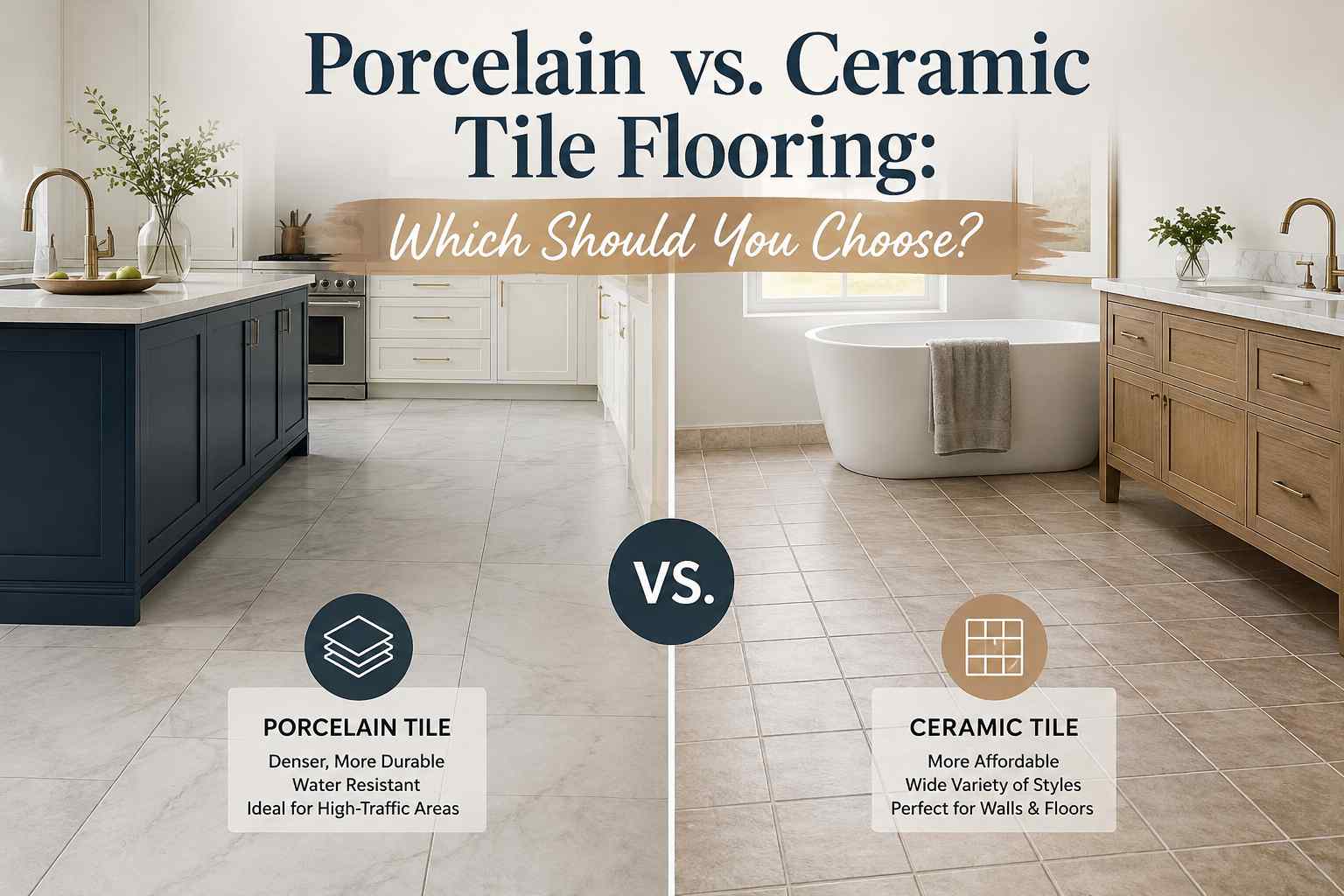
Choosing tile flooring can shape the look, comfort, and function of a room for years. With so many colors, patterns, sizes, and finishes available, it helps to know how each tile type works before making a decision. The distinction between porcelain vs ceramic tile flooring is a key choice for homeowners who want a floor that looks great and fits the needs of each room.
Porcelain and ceramic tiles both offer style, strength, and easy care, yet their makeup and best uses are not the same. A clear look at both options can make your flooring project much easier.
What is Porcelain Tile Flooring?
Porcelain tile is made from refined clay and other natural materials. The tile goes through a high-temperature firing process. This creates a dense and strong surface with low water absorption.
Porcelain works well in spaces where moisture, daily foot traffic, and regular cleaning are part of life. It comes in a wide range of colors and designs. Some styles even look like wood, stone, or marble.
For homeowners who want a strong floor with a polished look, porcelain offers a useful mix of beauty and function. Professional Porcelain tile installation also helps the finished floor perform well for years.
What is Ceramic Tile Flooring?
Ceramic tile is made from clay and other natural materials, then fired in a kiln. It has a slightly softer body than porcelain and offers a broad range of design choices.
Ceramic tile works well for walls and floors in several parts of the home. It can add color to a kitchen, create a clean bathroom floor, or bring a fresh look to a living space.
A skilled ceramic tile installation company can help homeowners select the right tile size, layout, grout, and finish for the room. Good planning also helps create clean lines and a smooth final look.
What is the Difference Between Porcelain and Ceramic Tile Flooring?
The biggest difference comes down to density and water absorption. Porcelain is denser and has a lower water absorption rate. Ceramic tile has a more open body and can offer a lighter option for some home projects.
Both types can deliver attractive floors. The right choice depends on the room, traffic level, moisture exposure, design goal, and care needs.
| Feature | Porcelain Tile | Ceramic Tile |
| Density | Higher | Lower |
| Water absorption | Very low | Higher than porcelain |
| Durability | Excellent | Very good |
| Design options | Wide range | Wide range |
| Moisture use | Excellent | Good with proper selection |
| Best fit | High-traffic and wet areas | Living spaces, walls, and select floors |
| Cutting | Can need stronger tools | Easier to cut |
| Care | Simple routine cleaning | Simple routine cleaning |
Is Porcelain Tile More Durable Than Ceramic?
In general, porcelain has a denser body and offers strong resistance to wear. Its dense structure makes it a great fit for busy rooms and areas where moisture is present. Ceramic tile also offers dependable performance in the right setting. It can work well in bedrooms, dining areas, living rooms, and other spaces with normal household traffic.
Your floor also needs the right base, grout, layout, and installation method. Even a high-quality tile needs proper care and skilled work. Experienced tile installers review the room and help match the tile to its intended use.
Recent Blog: Top 10 Common Laminate Flooring Myths Debunked
Which Tile Flooring Is Best for High-Traffic Areas?
Porcelain often makes a strong choice for entryways, hallways, kitchens, and busy family spaces. Its dense body helps it handle regular foot traffic and daily use.
For a home with pets, children, or frequent visitors, porcelain can offer added peace of mind. Still, the tile’s rating and surface finish matter. A flooring professional can help you select a tile suited to the amount of traffic in your home.
Ceramic can also work well in areas with moderate foot traffic. The key is to match the tile to the room instead of choosing based on appearance alone.
Which Tile Is Best for Kitchens?
Best tile flooring for kitchens should offer easy care, strong performance, and a style that works with the rest of the room. Both porcelain and ceramic tile can meet these needs.
Porcelain has an edge in areas where spills and moisture are common. Its low water absorption makes it a useful option for kitchen floors. Ceramic offers a wide range of colors and patterns, which makes it easy to build a custom design.
Think about the kitchen as a whole. Cabinet color, counter material, lighting, grout shade, and room size all affect how the tile will look.
Which Tile Is Best for Bathrooms?
Best tile flooring for bathrooms needs to handle water and regular cleaning. Porcelain offers low water absorption and works well for bathroom floors, shower areas, and other damp spaces when the selected product is rated for the intended use.
Ceramic can also be a great bathroom choice. It offers plenty of design options and can work well on floors and walls.
For either material, proper sealing requirements, grout selection, slope, and installation matter. A professional can also help select a surface with suitable slip resistance for the space.
How Does Moisture Affect Your Tile Choice?
Bathrooms, laundry rooms, kitchens, and entry areas can all see water or dampness. Choosing suitable Moisture-resistant flooring solutions can help protect the floor and support easy care.
Porcelain has a naturally low water absorption rate, so it is well suited to moisture-prone spaces. Ceramic can work in these areas too, provided the product meets the needs of the room.
Good Moisture-resistant flooring solutions also depend on proper installation. The subfloor, grout, joints, and drainage all play a role. A well-planned project creates a finished floor built for the room’s conditions.
What Should You Know About Tile Installation?
Tile installation involves much more than placing tiles in rows. The surface must be clean, level, and ready for the chosen material. Tile size, pattern, grout width, cuts, transitions, and room layout also need careful planning.
Professional Porcelain tile installation helps create a firm and even finished surface. Proper spacing can support a clean design, while correct adhesive selection helps the tiles bond to the prepared surface.
A trusted ceramic tile installation company can handle similar details for ceramic floors. Professional work can also help reduce layout issues and create a neat finish around cabinets, doorways, corners, and other fixed features.
How Do You Choose Between Porcelain and Ceramic Tile?
Start with the room. Ask how much foot traffic the area gets, how much moisture it sees, and what type of look you want.
If you need Porcelain or Ceramic Tile Flooring for a busy or damp area, porcelain may fit the space well. If you want a versatile tile for a living area, wall, or moderate-use floor, ceramic may suit the project.
You should also consider tile size and finish. Large tiles can create a clean, open look. Smaller tiles can add detail and work well with certain layouts.
Experienced tile installers can review these factors and help you narrow down the options. A professional review can also guide you toward suitable Moisture-resistant flooring solutions for kitchens, bathrooms, laundry rooms, and entryways.
Must Read: Hardwood vs Luxury Vinyl Plank: Finding the Best Wood Aesthetic for Your Home
Porcelain and Ceramic Can Both Bring Style Home
The best flooring choice should balance function and design. Porcelain offers a dense body, low water absorption, and strong performance for busy areas. Ceramic offers a broad design range and works well in several rooms across the home. A thoughtful choice can give your home a floor that looks good and fits daily life.
Bring Your Flooring Vision to Life
Your floors should fit your home, your daily routine, and your personal style. Diamond Floors of South Carolina can help you review porcelain and ceramic options and plan a tile project suited to your space.
From Best tile flooring for kitchens to Best tile flooring for bathrooms, the right material and skilled installation can create a floor you will enjoy for years. Contact Diamond Floors of South Carolina today to discuss your flooring goals and discover the tile solution that fits your home.
Frequently Asked Questions
Q1: What are the main differences between porcelain and ceramic tile flooring?
Porcelain has a denser body and lower water absorption, while ceramic has a softer body. Both offer many colors and styles. Porcelain suits demanding areas, while ceramic fits several residential spaces.
Q2: Which is more durable for everyday use: porcelain tile or ceramic tile?
Porcelain is generally more durable due to its dense body and strong wear resistance. Ceramic also performs well in suitable areas. Room traffic, tile rating, installation quality, and proper care all affect floor performance.
Q3: Is porcelain tile worth the higher cost compared to ceramic tile?
Porcelain can offer strong value in busy or moisture-prone rooms due to its dense structure and low water absorption. Ceramic can suit other areas well. The best option depends on room use and project goals.
Q4: Which tile flooring is better for kitchens, bathrooms, and high-moisture areas?
Porcelain is a strong option for kitchens, bathrooms, and other damp spaces due to its low water absorption. Ceramic can also work well when the selected product and installation meet the room’s moisture needs.
Q5: How do I choose between porcelain and ceramic tile for my home?
Review each room’s traffic, moisture level, style, and maintenance needs. The difference between Porcelain and Ceramic Tile Flooring should guide the decision. Professional advice can help match the material to each space.

O.K. Van Slett is the Owner of Diamond Floors of South Carolina, a family-owned flooring company founded in 1995. Built on a commitment to quality craftsmanship, exceptional value, and personalized service, O.K. continues the company’s mission of helping homeowners and businesses make confident flooring decisions. Drawing on years of hands-on experience, he shares practical insights on hardwood, luxury vinyl plank (LVP), laminate, tile, carpet, and professional installation. His articles are designed to educate readers with trusted, experience-based guidance on selecting, installing, and maintaining quality flooring for lasting performance and beauty.